
Literature Review on Customer Satisfaction Dr. Ankur Saxena (Technocrats Institute of Technology - MBA, Bhopal, India) 1. Introduction: Customer satisfaction is an ambiguous, abstract and confusing concept. Customer satisfaction refers to the extent to which customers are happy and delighted with the products and services provided by a business. In of Indian telecom industry. The Indian telecom industry is LITERATURE REVIEW According to Kotler and Armstrong () price is an To study the demographic factors affecting customer satisfaction towards telecom services provided by telecom operators in Haryana. 2) Within To analyse the impact of demographic factors affecting Author: Kapil Kumar Abstract-Indian Telecom industry is one of the fastest growing telecom markets in the world. In telecom industry, service providers are the main drivers, The entitled “A Study on Customer satisfaction towards Reliance Jio network” is carried out with an objective to determine the customer satisfaction on Reliance JioCited by: 1
Customer Satisfaction: A Literature Review - Brook Writers
Telecommunications players ranging from cable providers to fixed-network services and mobile operators are facing numerous challenges. The main ones are the commoditization of voice and data services and cord-cutting —because of the availability of over-the-top OTT options. Additionally, review of literature on customer satisfaction in telecom sector, aggressive newcomers are emerging to offer connectivity alternatives like fixed wireless.
All these challenges threaten the traditional revenue sources review of literature on customer satisfaction in telecom sector communication service providers.
As competition intensifies in the ICT industry, price is not enough to keep customers satisfied and loyal. Customer satisfaction in the telecommunications arena begins to mean something more related to an excellent experience than to price. With built-in, self-performing capabilities, intelligent data along with smart devices, are both now able to take independent action that translates into reduced customer response times, decreased equipment breakdown periods, more efficient service processing, automatic and more accurate record updating, and overall improved customer satisfaction levels.
Read more in our blog post The Future of Service Assurance — Actionable Intelligence. Forward-looking companies are turning to customer service and customer satisfaction to gain a competitive advantage and generate revenue. Nowadays, telecommunication companies cannot rely on price alone to attract and retain customers; they must ensure that customers are satisfied and have a great experience.
When customers are not satisfied with the service you offer them, they can take their business to competitors and spread the word about the poor service your company offers. Customer satisfaction has numerous benefits for telecommunication operators. Below are some of them, review of literature on customer satisfaction in telecom sector. Customer satisfaction involves ensuring the emotional and functional satisfaction of customers.
While emotional satisfaction is based on the experience of a service, functional satisfaction deals with the performance of a service. According to Forbes, surveys conducted in different countries revealed that the telecommunication industry is among the industries that consumers dislike most. Therefore, the sector needs to devise ways to improve customer satisfaction and experience.
Below are six ways telecommunication operators can ensure customer satisfaction. Each customer has unique communication needs. Therefore, it is imperative for telecommunication companies to anticipate customer needs and prepare operators to meet them.
How do you anticipate customer needs? A telecommunications provider can engage and interact with customers as well as interpret their usage patterns to know customer needs and meet them. As you meet customer needs, it is essential to offer customers plans that benefit them, not only the ones that have the most Average Revenue per User ARPU.
Meeting customer needs will build customer loyalty and increase satisfaction with your brand. One prominent way of increasing customer satisfaction is spotting problems before customers complain about them.
A telecom firm serving the Hong Kong region used this tip to improve customer experience translating to customer satisfaction. Hong Kong cannot afford slow connections or network downtime because it would affect trade securities. Imagine the effect of a network outage on Hong Kong securities. It means significant financial losses and other non-monetary effects. In a bid to offer a good customer experience, the telco adopted a monitoring technology that shrank the response time to 30 minutes.
Also, it developed a practice of letting customers know when a network outage is unavoidable and assuring them that technicians are working to resolve the issue. This approach of addressing issues before customers detect them had positive outcomes for the telecommunications company. A few decades ago, if you gave customers the ability to communicate with you through voice, chat, and email, they would be delighted, and that would be considered as personalized service.
However, today, a multichannel touch alone is not enough to satisfy customers. The contemporary digitally affluent customers want personalized service with omnichannel experiences. They want to shift from one communication channel to another during the same engagement. For example, a customer might contact technical support through chat to report a problem with his subscription. Later, the customer may want to talk to an agent without having to repeat everything they have said in review of literature on customer satisfaction in telecom sector chat.
This requires excellent omnichannel functionality whereby you can continue conversations and transactions across devices while maintaining effective and unbroken communication. They want to live with the assurance that they can get help whenever they need it. Although it is a high bar, other industries have crossed it.
Why not the telecommunications sector? Notably, telecommunications operators should be aware that although customers use multiple channels to make enquires; they also use them to report bad customer service and experiences.
Hence, operators should keep tabs on the multiple channels customers use. Every business at one time asks; how can we serve our customers better? Although this may seem like a complex question, it is not. You can serve your customers better by harnessing data to learn more about your customers. Luckily, the telecommunication industry has access to loads of customer data than other industries. Nevertheless, this industry is not using the data effectively to gain insights into customer behavior and usage patterns and hence increase customer satisfaction.
For example, a company can analyze the consumption data of clients to determine customers that are high-maintenance, price-sensitive, and those who upgrade frequently. With such data, the organization can identify opportunities for upselling and cross-selling and offer discounts and incentives. C Spire is a prime example of a company that harnessed the power of data analytics to improve customer experience and satisfaction.
It is a privately held wireless communications provider with a customer base of almost one million. In a bid to beat the wireless giants in its market, the provider used predictive analytics to examine customer behavior, establish the right services for every user, address customer needs, and reduce churn.
The customer service of the telecommunications industry is less than ideal. This is in spite of the significant strides the industry has made to improve customer service in the last few years. InTemkin Group conducted a Net Promoter Score Benchmark stud y to measure the NPS —a form of customer metric- of companies in 20 industries.
Regrettably, the communications sector was the dead last, review of literature on customer satisfaction in telecom sector. Internet service providers, TV service providers, and wireless carriers ranked in the bottom five. Telecommunications operators lag in resolving issues. Poor resolution of customer concerns is a conspicuous sign of poor customer service and results in customer dissatisfaction. Whether a customer has a concern related to billing, deactivation, or network, it should be addressed as quickly as possible.
Hiring top talent agents and training them thoroughly is not enough. You have to go a mile further and empower them to handle customer issues rather than passing over the problem. They want to talk to someone who can resolve their issue in the first place. By empowering agents, they respond to customer queries promptly and solve their issues resulting in greater customer satisfaction. Also, the agent gets a sense of pride in their job, increase job satisfaction, and reduce turnover rates —and costs.
Ensuring customer satisfaction is a necessity in the telecommunications sector. Customer satisfaction has positive outcomes for telecommunications operators such as increasing sales and profitability, review of literature on customer satisfaction in telecom sector, improving customer loyalty, lowering marketing costs, and attaining competitiveness.
The secret to improving customer satisfaction is paying attention to customer needs, striving to fulfill them, and offering customers a memorable experience. How Telecommunications Operators can Increase Customer Satisfaction August 12, Charlene Briganty. Benefits of Customer Satisfaction for Telecommunications Operators Customer satisfaction has numerous benefits for telecommunication operators. Increases customer loyalty: when customers are satisfied, they are likely to stay with a business for long, which boost sales and profitability.
Gives competitive advantage: customer satisfaction helps telecommunication operators achieve competitiveness because their customers are less interested in a competitor. Increases word of mouth awareness: word of mouth is a prominent and effective form of advertising that all operators should embrace.
Satisfied customers are likely to recommend your business and products to their personal connections including friends and families. Reduces marketing expenses: when satisfied customers become your advocates and brand ambassadorsthey help you generate new customers.
You will get repeat purchases without a high promotional expenditure. Increases sales: satisfied customers assure repeat business, offer referrals, and reduce churn, which increases your sales. Promises greater customer participation: satisfied customers can offer input for improving products, processes, and service initiatives. Ensures success with new products: when your customers are satisfied, they look forward to new products and services. Hence, increasing the success of review of literature on customer satisfaction in telecom sector products and line extensions.
Anticipating Customer Needs and Preparing Operations to Meet Them Each customer has unique communication needs. Handling Issues Before Customers Detect Them One prominent way of increasing customer satisfaction is spotting problems before customers complain about them.
Provide Omnichannel Support A few decades ago, if you gave customers the ability to communicate with you through voice, chat, and email, they would be delighted, and that would be considered as personalized service. Harness Customer Data Every business at one time asks; how can we serve our customers better?
Fast Resolution of Issues The customer service of the telecommunications industry is less than ideal. Empower Agents Hiring top talent agents and training them thoroughly is not enough. You may also like. IoT Use Cases for Telecommunications Industry.
Open-Source Software: All That You Need to Know. Leveraging AI for Better Customer Service. Sign up to receive review of literature on customer satisfaction in telecom sector opinions and insights on codeless provisioning automation trends and issues.
How To Write A Literature Review In 3 Simple Steps (FREE Template With Examples)
, time: 40:13(PDF) A Literature Review and Critique on Customer Satisfaction | Huan Liu - blogger.com
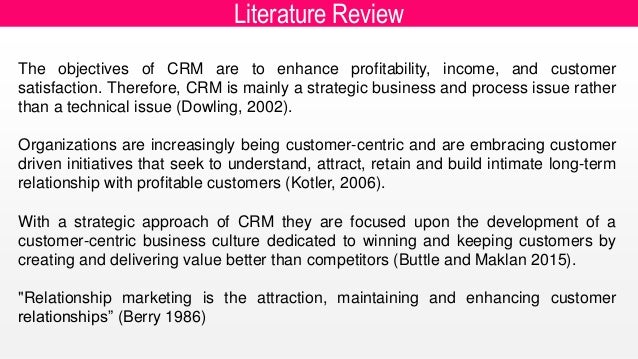
Literature Review on Customer Satisfaction. Dr. Ankur Saxena (Technocrats Institute of Technology - MBA, Bhopal, India) 1. Introduction: Customer satisfaction is an ambiguous, abstract and confusing concept. Customer satisfaction refers to the extent to which customers are happy and delighted with the products and services provided by a business Abstract-Indian Telecom industry is one of the fastest growing telecom markets in the world. In telecom industry, service providers are the main drivers, The entitled “A Study on Customer satisfaction towards Reliance Jio network” is carried out with an objective to determine the customer satisfaction on Reliance JioCited by: 1 Kumar (), in their study titled “Customer Satisfaction and Discontentment of BSNL Landline Service: A Study” analyzed that at present, services marketing plays a major role in the national economy. In the service sector, telecom industry is the most active and attractive. Though the telecom industry is


No comments:
Post a Comment